Winter isn’t just uncomfortable for seniors; it fundamentally changes how the cardiovascular system operates. The cold forces blood vessels to constrict, blood to thicken, and the heart to pump harder to maintain core temperature. For an older adult, these physiological shifts can turn a simple walk to the mailbox into a significant cardiac event. Understanding these risks isn’t about living in fear of the cold, but about respecting the added stress winter places on the aging cardiovascular system.
Why Cold Air Feels Different to an Older Heart
Many people assume that if they feel “fine” in the cold, their heart feels the same way. This is a dangerous misconception because the heart’s distress signals change as we age. Neuropathy or diminished nerve sensitivity can mask the typical warning signs of angina (chest pain) during cold exposure. Furthermore, there is a widespread belief that heart risks are highest during physical exertion like shoveling snow, but the risk actually begins the moment the cold air hits the face. The vagus nerve, stimulated by cold, can immediately alter heart rate and rhythm before the body even starts moving.
How Much Does Cold Weather Raise Blood Pressure?
**It can raise systolic blood pressure by 10 to 20 mmHg in a matter of minutes.**
When the body is exposed to cold, it narrows the blood vessels (vasoconstriction) to preserve heat for the vital organs. This narrowing creates more resistance, forcing the heart to work harder to push blood through. For a senior with stiff arteries—a natural part of aging—this increase is even more pronounced. This spike is often temporary, but if a person goes in and out of the cold repeatedly throughout the day, they are forcing their heart to play a continuous game of catch-up, which can lead to exhaustion of the cardiac muscle.
Why Are Early Morning Hours Particularly Risky?
**The combination of circadian rhythms and cold temperatures creates a “perfect storm” for cardiac events between 6:00 AM and 10:00 AM.**
Upon waking, the body naturally releases cortisol and adrenaline, which already raise heart rate and blood pressure. If a senior leaves a warm bed and enters a cold house or ventures outside during these hours, they are adding a massive environmental stressor on top of a natural hormonal spike. Blood is also most viscous (thick and sticky) in the morning due to overnight fluid loss. This thicker blood, combined with cold-induced vasoconstriction, drastically increases the likelihood of clot formation.
Does Shoveling Snow Actually Stop Hearts?
**Shoveling is dangerous not just because of the exertion, but because of the specific type of exertion it requires.**
It involves the Valsalva maneuver—holding your breath while straining. This action causes a sudden, dramatic spike in blood pressure and places immense pressure on the thoracic cavity. For seniors, combining this maneuver with lifting heavy, wet snow in freezing temperatures can trigger a dissection of the aorta or a complete occlusion of an artery. The “stop” is often not the heart simply getting tired; it is a mechanical failure caused by pressure spikes that the vascular system can no longer contain.
How Does Indoor Heating Affect Heart Strain?
**While staying indoors avoids the cold, overheating the home creates its own cardiac stress.**
High indoor temperatures, combined with the heavy layers seniors often wear, can lead to dehydration. When the body is too warm, it diverts blood flow to the skin to release heat, which lowers overall blood volume available for critical organs. If a senior is sweating indoors and then steps outside briefly (to get the mail or take out trash), the rapid temperature shift causes the blood vessels to snap open and shut violently. This vasodilation (opening) followed by immediate vasoconstriction (closing) can confuse the body’s baroreceptors, leading to sudden dizziness, falls, or arrhythmias.
The “Mailbox Test”: A Scenario in Risk
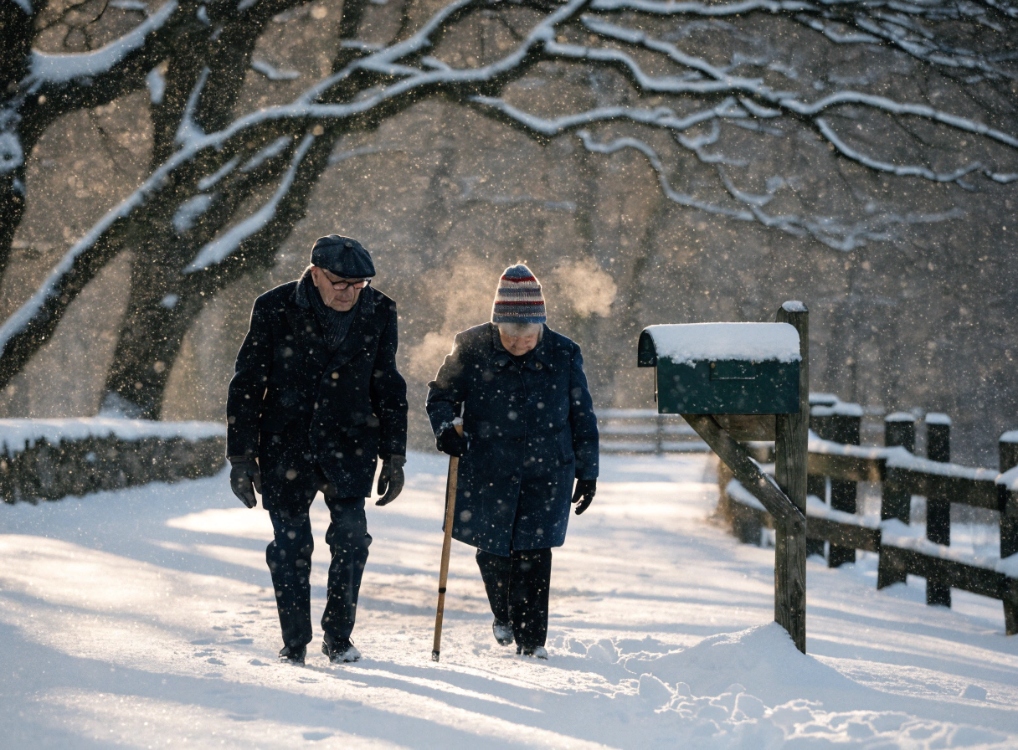
Imagine a 78-year-old man with controlled hypertension. It is 28°F outside with a light wind. He wears a heavy coat but no hat or gloves because he is “just going to the end of the driveway.” He takes a deep breath of cold air and holds it as he steps off the porch. By the time he reaches the mailbox—roughly 60 seconds later—his heart rate has increased 30%, his blood pressure has spiked, and his coronary arteries have narrowed slightly due to the cold. The physical act of walking is mild, but the *cardiovascular resistance* created by the environment is extreme. He feels no chest pain, only slight lightheadedness, which he dismisses. This scenario, repeated daily, is where the majority of winter cardiac events originate—not in the hospital, but in the mundane, unprotected moments.
Best Practices for Winter Cardiac Safety
– **Zone Dressing:** Instead of one heavy coat, wear layers that can be removed immediately upon entering a warm car or home. This prevents the body from overheating and then shocking the system with cold.
– **The Pre-Warm Ritual:** Start the car and turn the heat on high 10 minutes before departure. If walking outside, step into a mudroom or garage for one minute before opening the final door to the cold, allowing the skin to acclimate slightly.
– **Breathe Through the Nose:** Encourage nasal breathing when outdoors. This warms the air before it hits the lungs and moderates the vagal nerve response, preventing sudden drops in heart rate.
– **Hydrate for Viscosity:** Drink a glass of water before getting out of bed in the morning. Thinner blood moves more easily through constricted vessels.
– **Avoid the “Hold”:** Never hold your breath during any cold-weather activity, especially when lifting or bending. Exhale during the hard part of any movement.
The Winter Heart Summary
The winter heart is not a weak heart; it is a heart working overtime in an environment designed to steal its heat. The danger lies not in the cold itself, but in the rapid transitions between temperatures and the silent spikes in blood pressure that go unnoticed. By treating the walk to the car with the same respect as a workout, seniors can navigate winter without forcing their cardiovascular system into a defensive battle it cannot win.